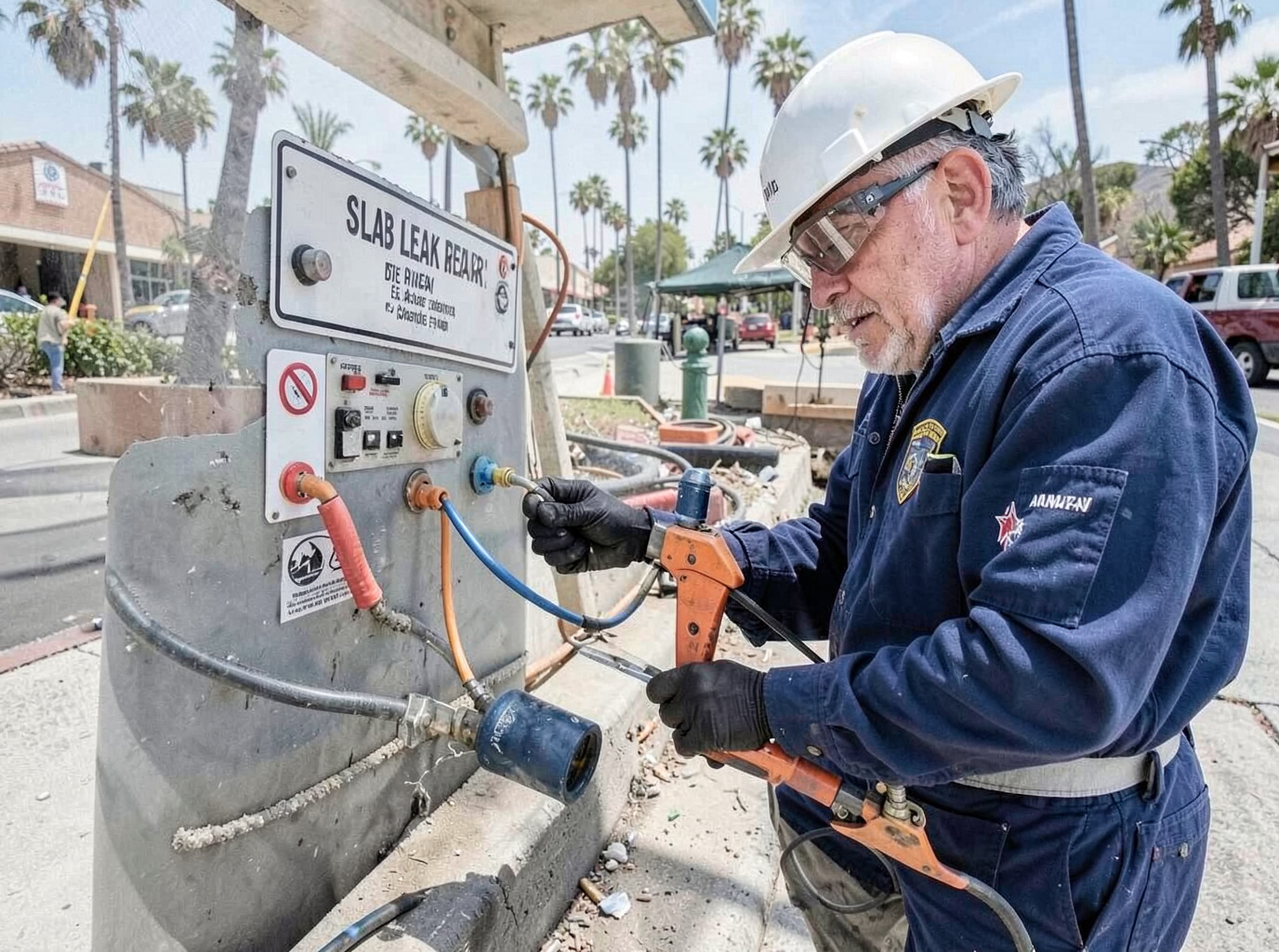
Anaheim homes built from the 1950s through the 1970s in West Anaheim and near the Disneyland Resort often sit on concrete slabs with copper or galvanized supply lines. These lines corrode over decades, especially where the mild Mediterranean climate allows minor soil movement during rare heavy winter rains. We locate leaks with acoustic sensors and electronic amplifiers before any concrete is opened, reducing the chance of unnecessary demolition in living areas or commercial spaces near Angel Stadium.
Orange County clay soils expand when moisture reaches them, which can crack older slabs or pull joints apart in neighborhoods like the Platinum Triangle. Technicians check for elevated moisture readings under flooring and use camera inspections to confirm the exact pipe section leaking. When access is limited, epoxy lining or section replacement is chosen based on pipe material and remaining service life rather than defaulting to full slab removal.
Local code requires permits for any work that disturbs structural concrete, and we coordinate those directly with Anaheim inspectors. After repair we pressure-test the line at 100 psi for 30 minutes and verify no moisture remains with infrared imaging. Homeowners in Garden Grove and Fullerton often call after noticing warm spots on tile or unexplained spikes in their water bill, both common early signs in Anaheim’s older housing stock.
Technician insight
In Anaheim, the thing that catches most people out with slab leaks is the clay soil in West Anaheim that shifts slightly during our occasional winter rains, stressing 60-year-old copper lines under the slab and creating pinhole leaks that go unnoticed until the water bill jumps.
West Anaheim Home Near Disneyland Resort
Homeowner noticed warm tile and a rising water bill in a 1964 slab house. Acoustic equipment isolated the leak under the living room. We accessed the line through a 12-inch opening, replaced the corroded copper section, pressure-tested the repair, and restored the floor with matching tile.
Slab Leak Detection and Repair Services We Offer
✓Electronic Slab Leak Detection
Pinpoints leaks under concrete using frequency-based equipment without breaking floors in Anaheim homes and businesses.
✓Acoustic Leak Location
Listens for water movement through slabs to isolate leaks near high-traffic areas like the Anaheim Resort and Honda Center.
✓Trenchless Slab Leak Repair
Replaces or lines damaged pipe sections under the slab with minimal excavation suited to tight lots in Downtown Anaheim.
✓Camera Inspection for Slab Leaks
Runs a waterproof camera through supply lines to confirm corrosion or joint failure common in 1960s West Anaheim construction.
✓Moisture Mapping and Testing
Uses infrared and moisture meters to map affected areas before repair in Platinum Triangle condominiums and single-family homes.
Slab Leak Detection and Repair Cost in Anaheim, CA
| Service | Typical Range | What Affects It |
|---|---|---|
| Electronic Detection Visit | $250–$550 | Varies with property size and number of suspected zones in West Anaheim or Platinum Triangle |
| Trenchless Section Repair | $1,200–$2,800 | Depends on pipe diameter and depth under slab |
| Epoxy Pipe Lining | $1,800–$3,500 | Chosen when multiple joints are corroded in older Anaheim homes |
| Concrete Restoration | $400–$900 | Includes matching finish on interior or exterior slabs |
Ranges are typical for Anaheim, CA and confirmed with an exact written quote before any work starts.
How it works
- 1
Site Assessment
Review water bill history and visible signs at the property in Anaheim, then confirm slab construction and pipe age.
- 2
Non-Invasive Detection
Deploy acoustic and electronic tools to locate the leak while protecting finished flooring and landscaping.
- 3
Targeted Access
Create minimal openings only where the leak is confirmed and protect surrounding concrete from unnecessary damage.
- 4
Repair and Verification
Perform pipe replacement or lining, then pressure test and scan for residual moisture before restoring surfaces.
Pricing
Detection starts lower than full repairs; final cost depends on access depth, pipe material, and whether epoxy lining or replacement is required.